
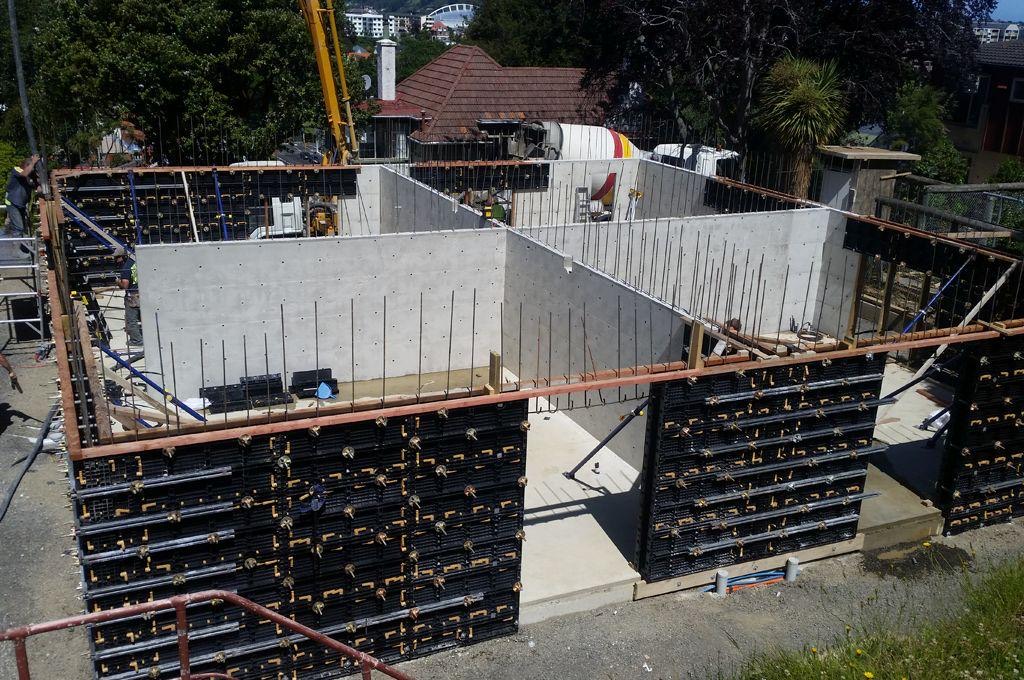

The film can still explain worthwhile work if each statement is matched to suitable evidence. Use this worksheet to distinguish what the audience can see now, what can be established through existing material and what needs a checked explanation.
Separate the claim from the available picture
Write the point the film needs to explain before choosing footage. Then ask what the current view actually demonstrates. A completed wall may locate a concealed element, but it does not prove its installation method or performance.
Describe that limitation plainly in the planning notes. The purpose is not to diminish the project; it is to prevent an attractive picture from carrying a claim it cannot support.
Identify the person who understands the hidden work and can confirm the factual explanation. Do not ask the editor to infer concealed details from general images of a similar project.
Build an evidence ladder
Start with current, direct evidence where it exists. Next consider project-specific photographs, footage, records or approved drawings that show the relevant stage. Then consider a first-hand explanation, supported by appropriate checking.
A diagram may help viewers understand a relationship, but it needs a clear source and suitable review. An illustration should not be presented as a record of actual hidden conditions unless that representation has been established and approved.
Treat generic stock or unrelated project images cautiously. They may illustrate an idea, but they should not be allowed to appear as proof of the actual work. If suitable evidence cannot be obtained, narrow or omit the claim rather than disguising the gap.
Give historical material enough context
Identify when and where an existing image was made, what it shows and which part of the project it represents. Confirm whether it is background information for the production team or a candidate for public use.
An early photograph may show a temporary condition rather than the final arrangement. A drawing may be superseded. Ask the responsible project contact to explain those distinctions before the material reaches the edit.
Permissions and technical suitability need their own checks. Having a useful image in a project folder does not automatically establish that it can be included in the film. The existing-material handoff worksheet can organise those details after the evidence choice is made.
Copy the concealed-work evidence card
| Field | What to record |
|---|---|
| Point to explain | Specific decision, relationship or contribution |
| Current visible evidence | What can genuinely be seen now |
| What remains hidden | Detail the present image does not establish |
| Project-specific historical material | Source, date and confirmed context |
| Knowledgeable person | Who can explain and check the point |
| Illustrative option | Diagram or other treatment requiring assessment |
| Limitation to preserve | What the audience must not infer |
| Publication readiness | Rights, accuracy and production questions outstanding |
| Final editorial decision | Show, explain, qualify or omit |
The ladder is not a ranking that always favours one medium. Its purpose is to make the connection between statement and evidence explicit.
A fictional concealed connection
A fictional contractor wants to explain a coordination decision involving a connection now hidden behind finished surfaces. The current footage can show where the element sits, but not how the connection was arranged.
The project team identifies a dated, project-specific photograph and asks the relevant specialist to confirm what it depicts. Production assesses whether that image and a limited explanation can communicate the point. The film does not substitute a similar-looking image from another job and imply it documents this one. This example is invented.
Make the limitation part of the brief
Tell production which evidence is confirmed and which remains under review. If the central point depends on unavailable material, decide whether a different story would be more useful before committing to an elaborate treatment.
Live Images' project-film service focuses on explaining a project through its people and pictures. Additional diagrams or other treatments need their own scope discussion. Use the technical explanation worksheet once the factual evidence is settled, so a clear presentation does not conceal an unresolved foundation.
Sources and editorial note
Live Images — Industry Standard, checked 29 October 2026, supports the limited description of the current project-film service and agreed scope.
The worksheet and fictional example are original planning guidance. Confirm project facts, responsibilities and any proposed production changes with the appropriate people and the written scope. Prepared with AI assistance for Live Images.